
Aldara (imiquimod) cream explained: what it treats, how it is used and what to expect
Aldara 5% (imiquimod) is used for certain skin conditions, including actinic keratosis and genital warts. What it treats, how it is applied, side effects, and who should check with a doctor first.
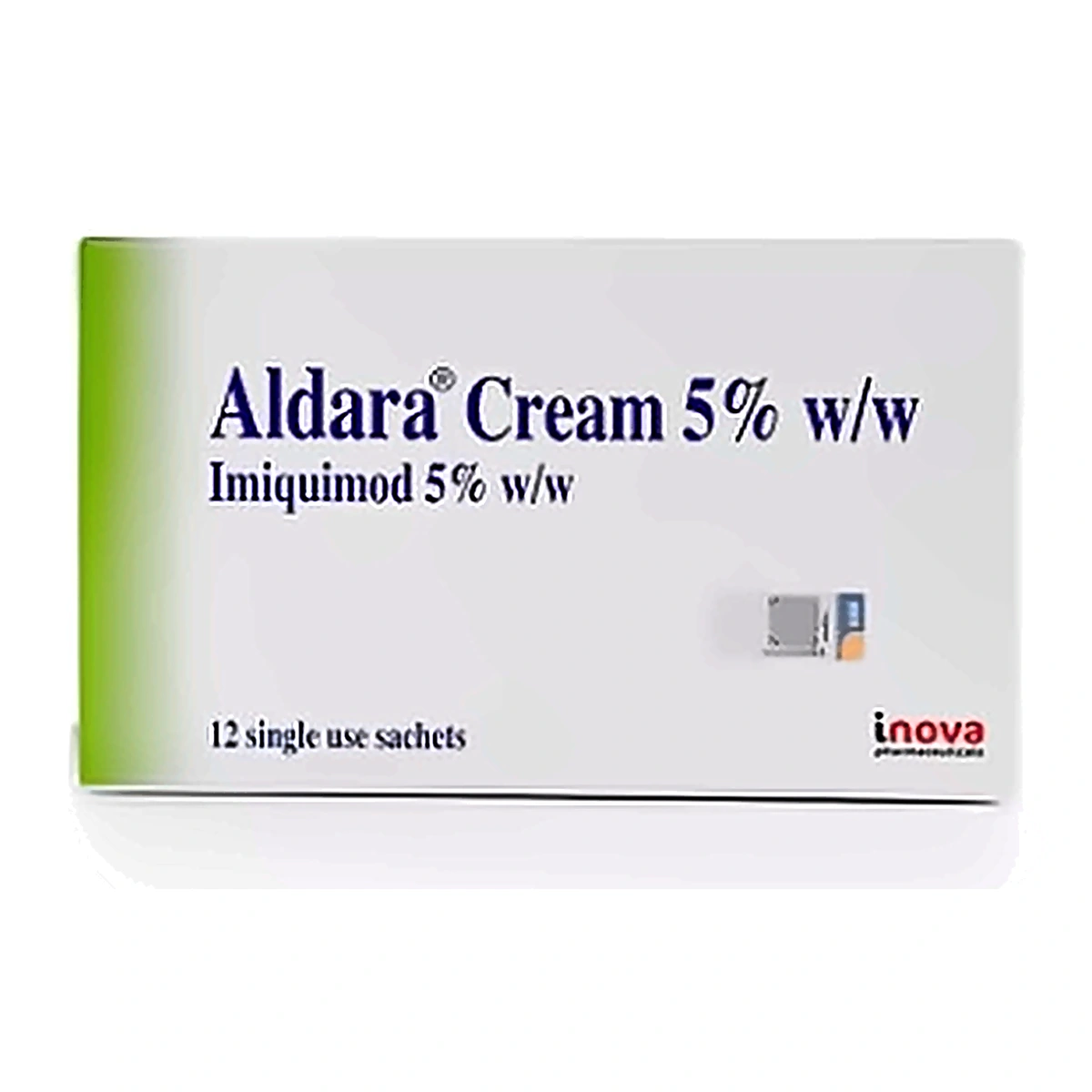
Aldara 5% cream contains imiquimod. It is used on certain skin conditions, where it helps the immune system clear abnormal skin cells or wart-causing virus in the treated area. See Aldara 5% at CAREPLUS: 12 single-use sachets.
In short: Aldara is for specific skin conditions only, applied to the treated area as the leaflet describes. Redness and soreness are common during treatment. A doctor reviews your order before it is sent, so please answer the questionnaire honestly.
What Aldara is used for
- Actinic keratosis: rough, scaly patches caused by years of sun exposure, usually on the face or scalp.
- Superficial basal cell carcinoma: a common skin cancer that stays in the top layer of skin, in suitable adults.
- Genital and perianal warts: warts on the outer genital or anal skin, in adults and young people from 12 years old.
Some uses need a doctor’s diagnosis first. Treating a skin change at home without a diagnosis can delay proper care.
How it is used
- Follow the leaflet and your doctor’s instructions for how often and for how long.
- Apply a thin layer to clean, dry skin. Wash the area off after the time stated in the leaflet.
- Wash your hands after applying it, and keep the cream away from your eyes, lips and nose.
- Do not use it on broken or inflamed skin unless your doctor has told you to.
What to expect
Redness, itching, burning, dryness, flaking, soreness and small sores at the treated area are common during treatment. These usually settle after the course. Flu-like symptoms can also happen.
See a doctor if
- the skin becomes very painful, blistered or swollen, or develops open sores that do not heal
- you get a fever, a rash spreading beyond the area, or severe flu-like symptoms
- a patch or mole changes shape, size or colour, or a sore does not heal within a few weeks
Who should check with a doctor first
- pregnant or breastfeeding women
- people with a weakened immune system or an autoimmune condition
- anyone unsure whether a skin change is a wart, a patch or something more serious
Related
Questions? WhatsApp CAREPLUS on +60 11-2615 1500.
Questions people ask
What is Aldara used for?
The approved uses include actinic keratosis (rough, sun-damaged patches on the face or scalp), superficial basal cell carcinoma in suitable adults, and external genital and perianal warts. Your doctor decides whether it suits your skin.
When will I see results?
It depends on the condition and the leaflet instructions. Skin reactions are common during treatment, and a doctor will check the area after the course.
Can I use Aldara on broken skin?
Not unless your doctor has told you to. Do not use it on broken or inflamed skin, and keep it away from the eyes, lips and nose.