HPV explained: what it is, how it spreads and what to do about it
HPV is very common and usually clears by itself. Learn who it affects, how it is tested, how the vaccine and screening protect you, and where Papilocare and Papillex+ fit.
Human papillomavirus (HPV) is a very common virus spread through skin-to-skin intimate contact. Most sexually active people will get at least one type at some point, and most infections clear up on their own without causing problems.
In short: HPV is common and usually harmless. Most infections go away within about two years. A few high-risk types can cause cervical cancer and some other cancers over many years, so screening (for women) and the HPV vaccine (for men and women) are the main protection.
What HPV does
There are more than 200 types of HPV. Some cause genital warts. Others, the “high-risk” types, can cause changes in the cells of the cervix that may, over many years, develop into cancer. HPV is also linked to cancers of the anus, penis, vulva, vagina and back of the throat.
Symptoms
Most HPV infections cause no symptoms, so many people never know they have it. Genital warts can appear as small bumps or clusters, and can itch or bleed. Warts are not cancer, but a doctor should still check them.
How HPV is checked
- Women: a Pap smear looks for abnormal cells, and an HPV DNA test looks for high-risk types. Ask a doctor when to start and how often to repeat screening.
- Men: there is no routine HPV test. A doctor can examine visible warts.
A positive HPV result is not a cancer diagnosis. Most positive results clear without treatment. Your doctor will tell you what follow-up is needed.
How to protect yourself
- HPV vaccine: Gardasil 9 protects against nine HPV types, including the high-risk types behind most cervical cancers. It is suitable for men and women. Ages 9 to 15 need two doses; over 15, three doses. See Gardasil 9 at CAREPLUS.
- Screening: keep up with cervical screening if you are a woman.
- Condoms: they lower the risk, but do not cover all the skin HPV can affect.
- Not smoking: smoking makes it harder for the body to clear HPV.
Papilocare and Papillex+
After an HPV result, some people look for products to support their body. Two that we sell are often asked about:
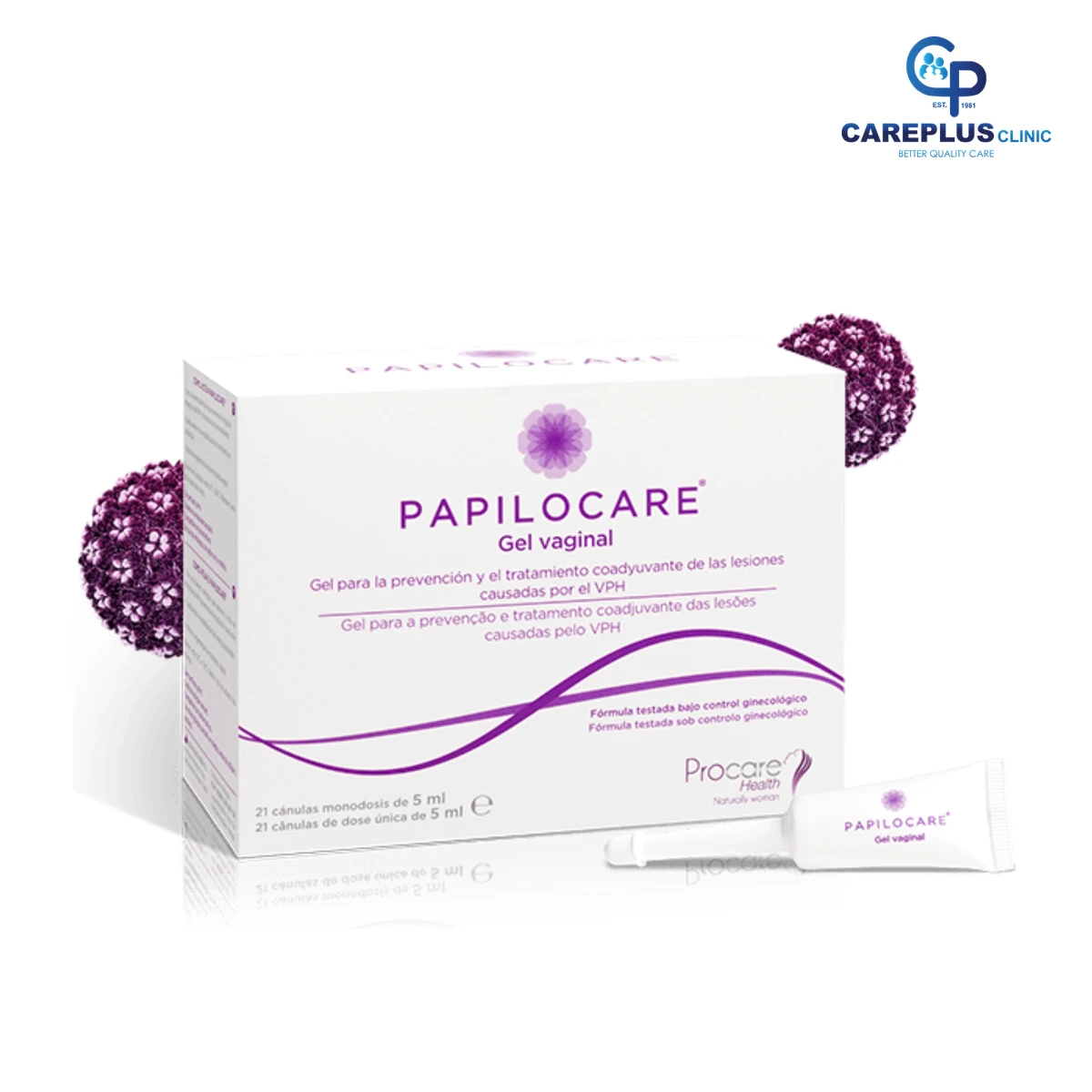
- Papilocare vaginal gel, a gel with a Coriolus versicolor base. Studies so far are small and promising, but it is not a proven cure for HPV.
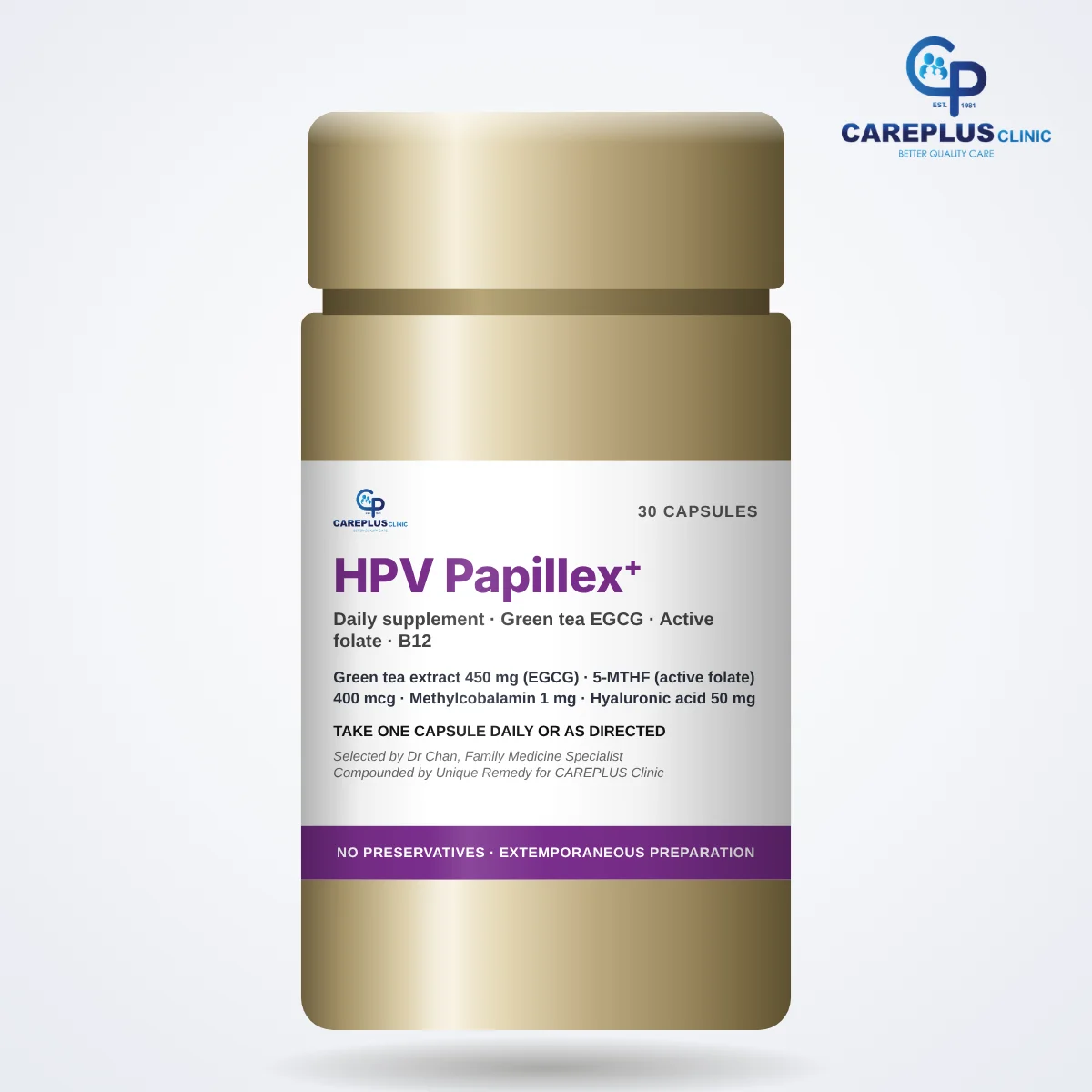
- Papillex+, a daily supplement with green tea extract, folate and vitamin B12. It is a supplement, not a treatment.
Neither product replaces screening, the HPV vaccine or advice from a doctor.
See a doctor if
- you notice new genital warts, bleeding after sex, or unusual discharge
- your Pap smear or HPV test is abnormal
- you have pelvic pain, or bleeding between periods or after menopause
CAREPLUS doctors can explain your results and next steps. WhatsApp +60 11-2615 1500. More health guides.
Questions people ask
Does HPV always cause cancer?
No. Most HPV infections cause no symptoms and clear up by themselves, usually within about two years. Only some high-risk types that persist for many years can lead to cancer.
Can men get HPV?
Yes. HPV affects men and women. Men can get warts and some HPV-related cancers, and the HPV vaccine is suitable for men too.
Does a positive HPV test mean I have cancer?
No. A positive HPV test means the virus is present. Your doctor uses it together with your Pap smear to decide whether you need a check-up or follow-up.