Papilocare in Malaysia: what it is, how to use it, what the studies show and where to get it
Papilocare vaginal gel explained: what is in it, how to use the cannulas, what the PALOMA study found, and how to get it in Malaysia through CarePlus Clinic.
If your Pap smear or HPV test has come back positive or slightly abnormal, your doctor may have mentioned Papilocare. It is one of the most searched women's health products in Malaysia, and also one of the most misunderstood. This guide explains what Papilocare is, what is in it, how to use it, what the studies really show, and how to get a genuine supply in Malaysia.
In short: Papilocare is a non-hormonal vaginal gel by Procare Health (Spain), based on Coriolus versicolor (turkey tail mushroom) with hyaluronic acid, beta-glucan, Centella asiatica, neem and aloe vera. It is used under a doctor's supervision by women with HPV and low-grade cervical changes, alongside regular follow-up tests. Studies, including the randomised PALOMA trial, are encouraging but small. In Malaysia it is supplied through doctors and clinics: enquire with CarePlus Clinic.
What is Papilocare?
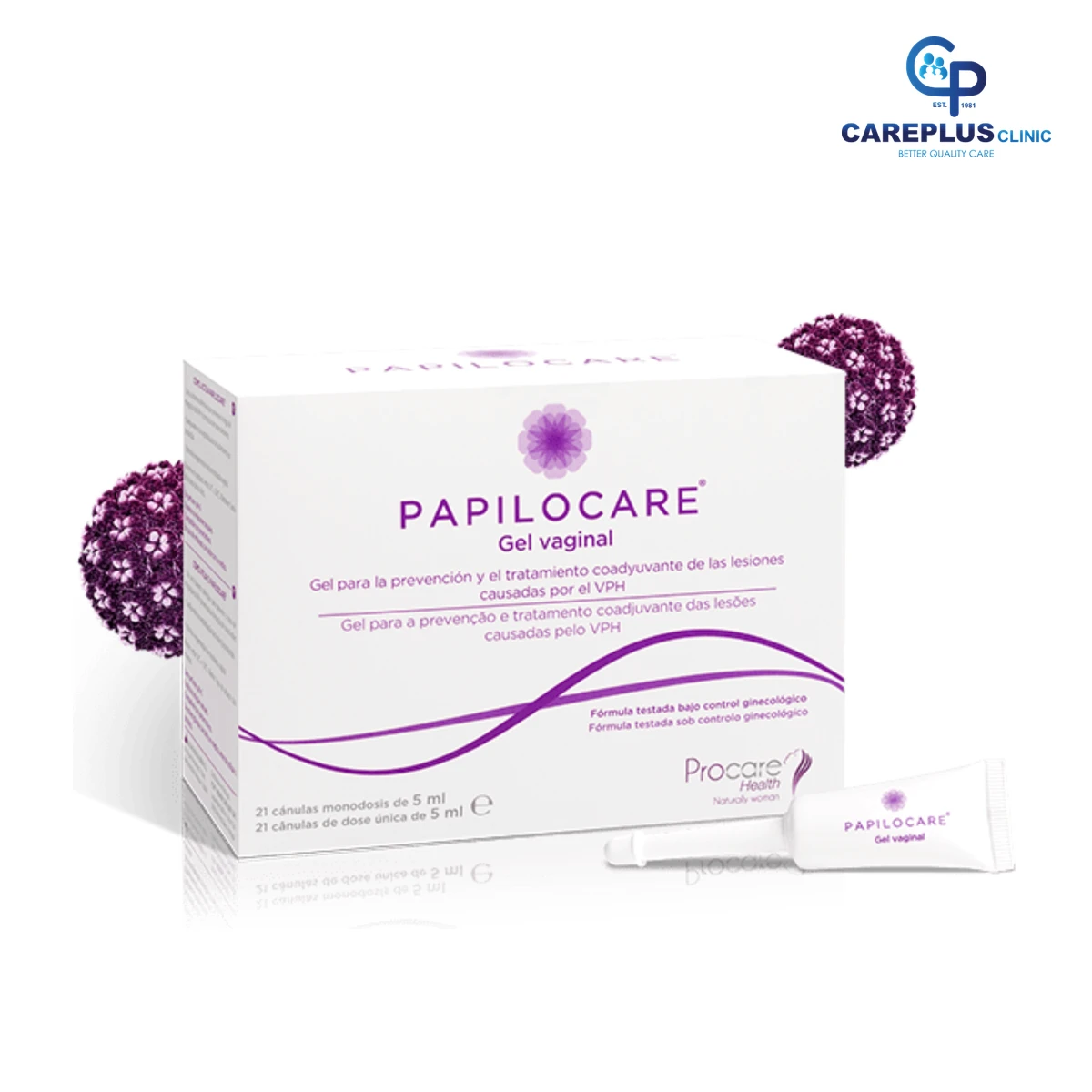
Papilocare is a vaginal gel supplied in a box of 21 single-dose cannulas (applicators) of 5 ml. In Europe it is sold as a medical device rather than a medicine. It does not contain hormones or antivirals. Its maker says it helps the lining of the cervix and vagina repair itself and keeps the vaginal environment healthy, which matters while the body works to clear HPV.
It is designed for women with HPV-related changes of the cervix, such as a positive high-risk HPV test or a low-grade abnormal Pap smear (ASC-US or LSIL), whose doctor recommends follow-up rather than immediate treatment.
What is in Papilocare
- Coriolus versicolor (turkey tail mushroom) extract: the key ingredient, studied for its effect on the cervical lining.
- Hyaluronic acid in niosomes: keeps tissue hydrated and supports healing.
- Beta-glucan: a natural fibre from fungi and cereals with soothing properties.
- Centella asiatica (pegaga): traditionally used to help skin and mucosa repair.
- Neem (Azadirachta indica) and aloe vera: soothing plant extracts.
- Alpha-glucan oligosaccharide (Bioecolia): a prebiotic that supports healthy vaginal bacteria.
Who is Papilocare for?
- Women with a positive high-risk HPV test, with a normal or low-grade Pap smear.
- Women with ASC-US or LSIL results whose doctor plans to repeat the tests in 6 to 12 months.
- Women who want to support the health of the cervical and vaginal lining during HPV follow-up.
It is not a replacement for colposcopy or for treatment of high-grade changes (HSIL, CIN2 or CIN3). Those need a gynaecologist.
How to use Papilocare
- Wash your hands. Twist off the cap of one cannula.
- Lie on your back with knees bent, or stand with one foot raised.
- Gently insert the cannula into the vagina and squeeze it to release all the gel.
- Remove and throw away the cannula. Bedtime use works best, as the gel stays in place.
The usual schedule: one cannula a day for 21 days in the first month, then one cannula every other day for the following months, for about 6 months in total. Some doctors keep the daily 21-day cycles for the first 3 months. Pause during your period and restart afterwards. Follow the schedule your doctor gives you. A full course usually needs several boxes.
What the studies show
- PALOMA (2021), a randomised trial in 9 Spanish hospitals with 91 evaluable women aged 30 to 65 with HPV and ASC-US or LSIL: after 6 months, 85% of women using the gel had normal cytology and colposcopy, compared with 65% under watchful waiting. In women with high-risk HPV the figures were 88% and 56%. High-risk HPV cleared more often with the 3-month daily schedule (82% vs 40%), but not with the shorter one. The trial was open-label and funded by the manufacturer.
- Women over 40 (2022): a sub-analysis of PALOMA found similar benefits in older women, who usually clear HPV more slowly.
- A 2026 study of 600 women in Turkey found HPV cleared in 89% of women who used the gel and 44% of those who did not, after 6 months. It looked back at records rather than randomising women, so it cannot prove cause and effect.
The honest summary: the results are encouraging, but the studies are small and larger trials are still needed. Papilocare does not clear HPV in every woman, and follow-up tests remain essential.
Side effects and who should ask a doctor first
Most women have no problems. Some notice mild itching, burning or extra discharge, which usually settles. Ask a doctor before using Papilocare if you:
- are pregnant, may be pregnant or are breastfeeding;
- have bleeding after sex or between periods that has not been checked;
- have a high-grade result (HSIL, CIN2 or CIN3) or an abnormal result that has not been followed up;
- are allergic to any of the ingredients.
Papilocare and your follow-up tests
Keep up with your Pap smear and HPV DNA test as your doctor advises, usually again after 6 to 12 months. Using condoms reduces re-exposure to HPV, and the HPV vaccine still helps protect against types you have not met. Read HPV explained: what it is and what to do for the full picture.
Papilocare and Papillex+
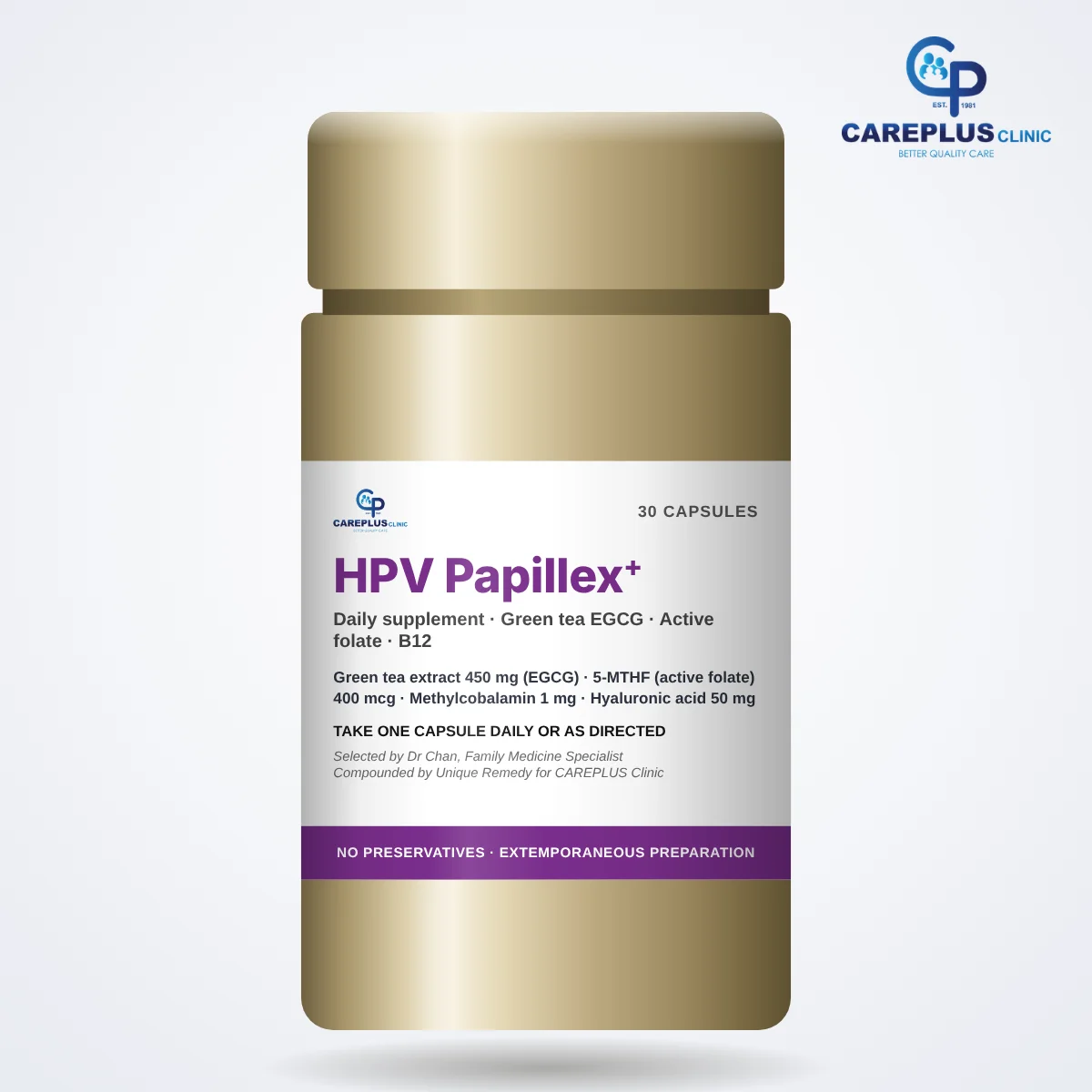
Some women also choose a daily oral supplement during their follow-up. CarePlus HPV Papillex+ combines green tea extract (EGCG), active folate and vitamin B12. It is a supplement, not a treatment; see what Papillex+ can and cannot do.
Save with code CARE7: enter CARE7 at checkout for RM7 off your order of selected products, such as HPV Papillex+. It is a saving on the whole order of selected items, not on Papilocare itself, which we supply through our doctor.
Where to get Papilocare in Malaysia
In Malaysia, Papilocare is supplied through hospitals and clinics rather than retail pharmacies or marketplaces such as Shopee, Lazada or TikTok Shop. Getting it from a clinic means a genuine, properly stored product and a doctor who can plan your follow-up.
CarePlus Clinic (Chye Clinic), a doctor-led clinic with a Family Medicine Specialist in Kepong, Kuala Lumpur, is an authorised seller of Papilocare. Enquire on our Papilocare page or WhatsApp us on +60 11-2615 1500 for the current price and availability. Our doctor will check your latest results with you, and we can deliver across Malaysia or you can collect at the clinic.
10. Questions people ask
Where can I buy Papilocare in Malaysia?
Papilocare is supplied through hospitals and clinics in Malaysia, not retail pharmacies or online marketplaces. CarePlus Clinic in Kepong, Kuala Lumpur can supply it after a short chat with our doctor: WhatsApp +60 11-2615 1500 or enquire on our Papilocare page. We deliver across Malaysia.
How much is Papilocare in Malaysia?
Prices change with supply, so WhatsApp CarePlus Clinic on +60 11-2615 1500 for the current price of a box of 21 cannulas. A full course usually needs several boxes.
How do I use Papilocare?
Insert one cannula into the vagina, ideally at bedtime. The usual schedule is one a day for 21 days in the first month, then every other day for the following months, about 6 months in total. Pause during your period, and follow your doctor's schedule.
Can I use Papilocare during my period?
No. Pause during your period and restart once it has finished.
Does Papilocare cure HPV?
No product has been shown to clear HPV in every woman. In the PALOMA trial more women using Papilocare had normal results after 6 months than women who only waited, but the studies are small. Keep up your follow-up tests.
Can I use Papilocare when pregnant?
Ask your doctor first. Papilocare has not been studied in pregnancy or breastfeeding.
Can I use code CARE7 on Papilocare?
CARE7 gives RM7 off your order of selected products, such as HPV Papillex+. Papilocare is supplied through our doctor, so it is not part of the online discount.
Sources
- Serrano L et al. (2021): Efficacy of a Coriolus versicolor-based vaginal gel in women with HPV-dependent cervical lesions, the PALOMA study. J Low Genit Tract Dis
- Efficacy of a Coriolus versicolor-based vaginal gel in HPV-positive women older than 40 years: sub-analysis of the PALOMA study (2022)
- High-risk HPV clearance with a Coriolus versicolor-based vaginal gel (2026), Diseases
- Clinical evidence on a Coriolus versicolor-based vaginal gel for HPV-related cervical disease: a narrative review