AHCC vs Papillex+: what each contains and what the evidence shows
AHCC (a shiitake mushroom extract) and Papillex+ (green tea EGCG, active folate, B12) compared by a family medicine specialist: what is in each, what the studies show, safety, and how to choose.
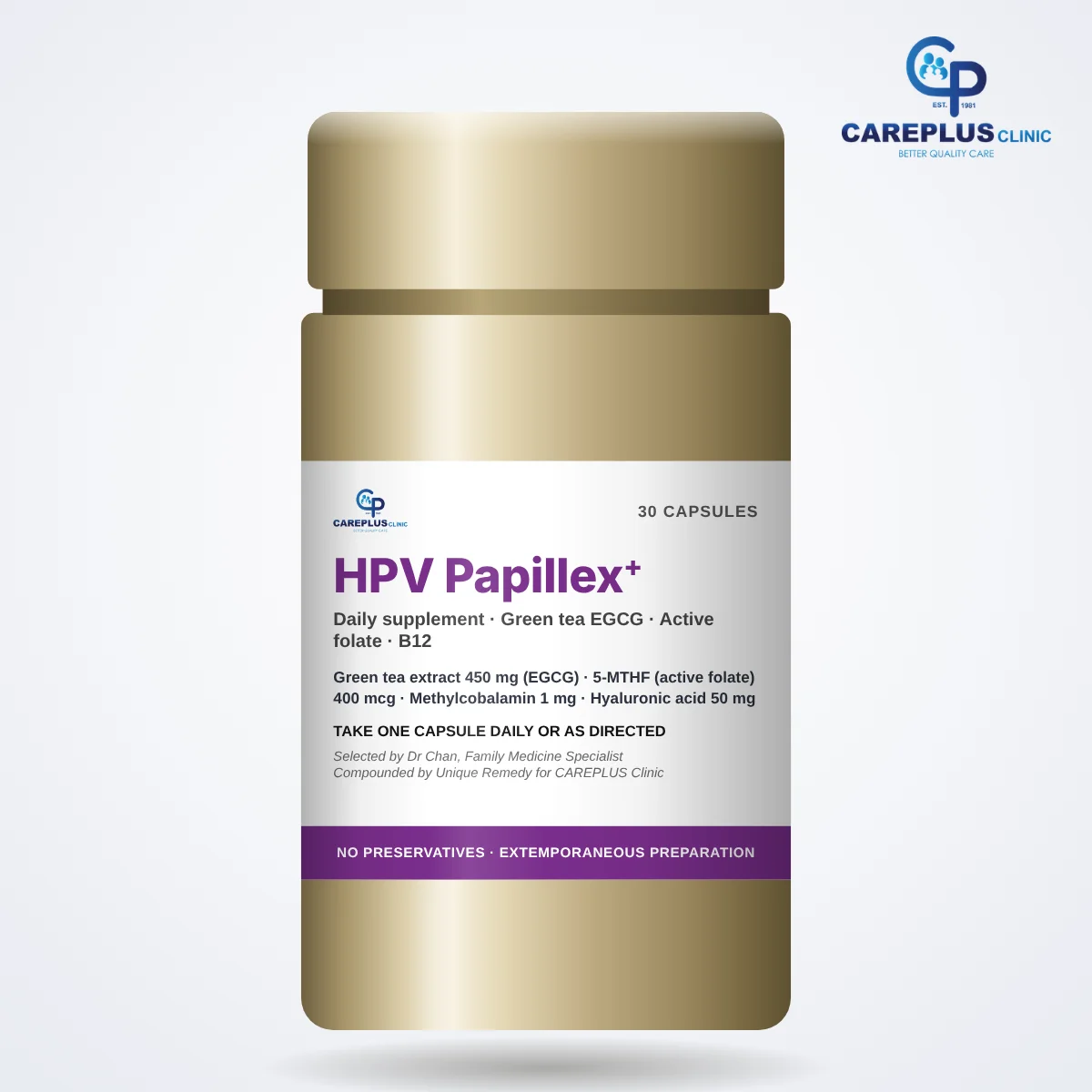
Women with a long-lasting HPV result often come across AHCC online and ask how it compares with Papillex+, our doctor-formulated supplement. They are very different products. Here is an honest comparison.
In short: AHCC has one small randomised trial in women with persistent high-risk HPV with encouraging results. Papillex+ is a nutrient supplement (green tea EGCG, active folate, B12) that has not been tested as a combination for HPV. Neither is a proven cure, and neither replaces your follow-up tests.
At a glance
| AHCC | Papillex+ | |
|---|---|---|
| What it is | An extract of cultured shiitake mushroom mycelia, made in Japan | Green tea extract 450 mg (EGCG), active folate 400 mcg, methyl B12 1 mg, hyaluronic acid 50 mg |
| How it is taken | 3 g once a day on an empty stomach in the study | 1 capsule a day with a meal |
| Main idea | Supports immune activity | Supplies nutrients the body needs for normal cell division and immune function, plus a green tea antioxidant |
| HPV evidence | One small randomised trial (below) | No trial of the combination; some studies on single nutrients |
| Who should check first | People on immune-suppressing medicines | People with liver disease or on blood thinners; take iron at another time |
What the AHCC study found
In a 2022 randomised, placebo-controlled trial in the United States, 50 women over 30 with high-risk HPV lasting more than 2 years took AHCC 3 g a day or a placebo; 41 finished the study. 14 of 22 women (64%) on AHCC tested HPV negative after 6 months, compared with 2 of 19 (11%) on placebo after 12 months. It is promising, but it is one small study, and the product used was a specific branded extract. Read the study.
What is known about the Papillex+ ingredients
- Folate and B12: both are needed for normal cell division. Some observational studies have linked low folate with HPV lasting longer, but taking folate has not been shown to clear HPV.
- Green tea catechins (EGCG): a green tea ointment is used on the skin for genital warts. Taken by mouth, only small, older studies exist in women with cervical changes, and larger trials have not confirmed a benefit.
- Hyaluronic acid: part of skin and moist linings; it helps keep tissue hydrated.
So Papillex+ is best seen as daily nutritional support during follow-up, not as an HPV treatment.
How to choose
- If you want the option with the most direct HPV study, that is AHCC. We do not sell it; ask a pharmacist for a reputable brand.
- If you want a simple daily supplement with active folate, B12 and green tea extract, Papillex+ is made for that.
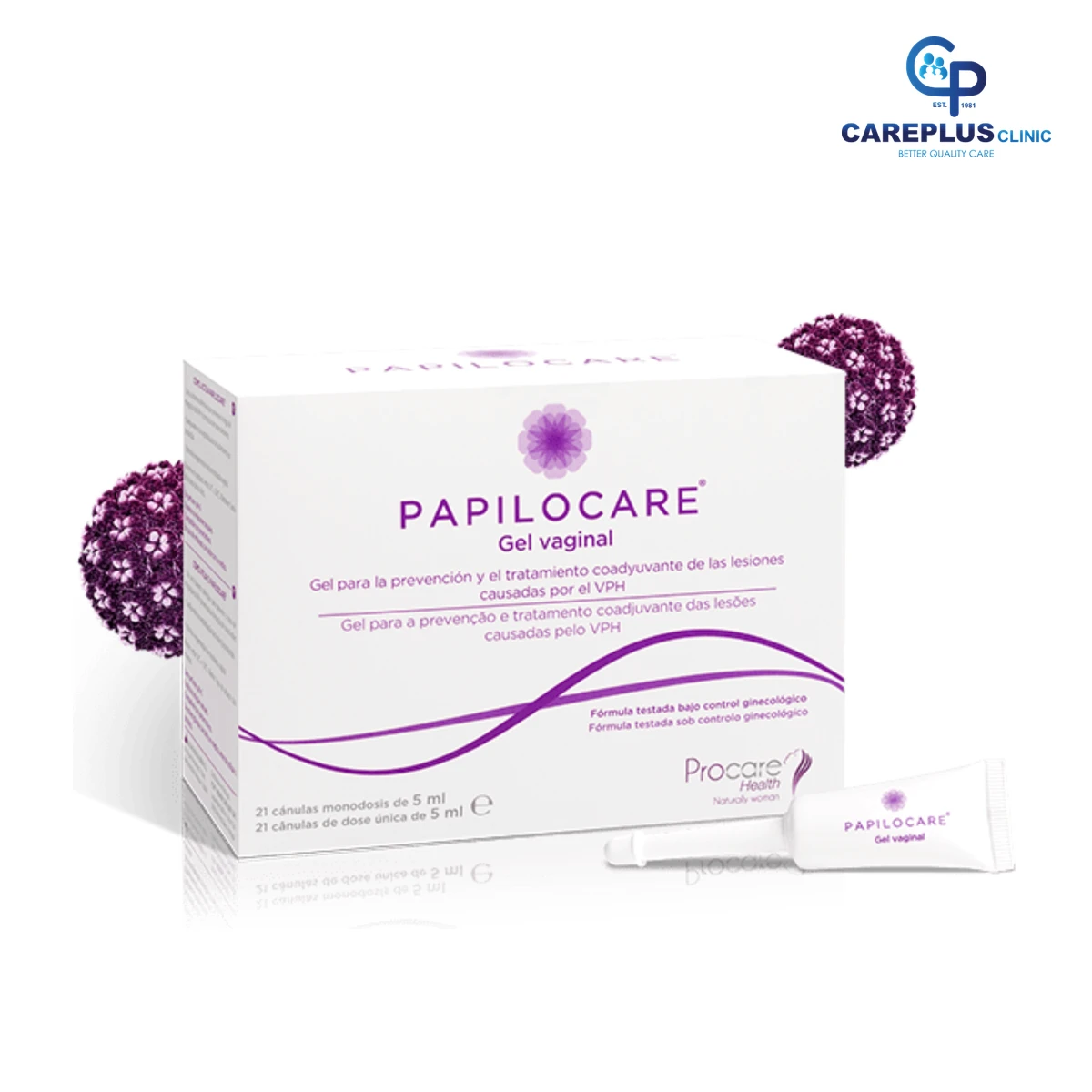
- Thinking of taking both, or adding the Papilocare vaginal gel? Ask our doctor first so we can check them against your health and medicines.
Whatever you choose, keep up your Pap smear or HPV test as your doctor advises. See HPV explained for the full picture.
5. Questions people ask
Does AHCC cure HPV?
No supplement is proven to cure HPV. One small randomised trial found 64% of women taking AHCC 3 g daily tested HPV negative after 6 months, versus 11% on placebo after 12 months. Larger studies are needed.
Does Papillex+ contain AHCC?
No. Papillex+ contains green tea extract (EGCG), active folate, vitamin B12 and hyaluronic acid. AHCC is a separate mushroom extract.
Can I take AHCC and Papillex+ together?
Ask our doctor first, so we can check both against your health and any medicines you take.
Sources
Get it from CarePlus Clinic
More health guides
- Papillex+ explained: green tea EGCG, active folate and B12, and what it cannot do
- HPV positive? What your result means, what happens next, and where Papilocare fits
- Papilocare studies explained: what the PALOMA trial shows, and what it doesn't
- HPV explained: what it is, symptoms, HPV 16 and 18, and what to do if you're positive