
Vitamin D: who needs it, how it is tested, and why high doses need a doctor
What vitamin D does, how low levels are checked with a blood test, why high-dose D-Cure 25000 IU should be used under a doctor’s advice, and the warning signs of too much vitamin D.
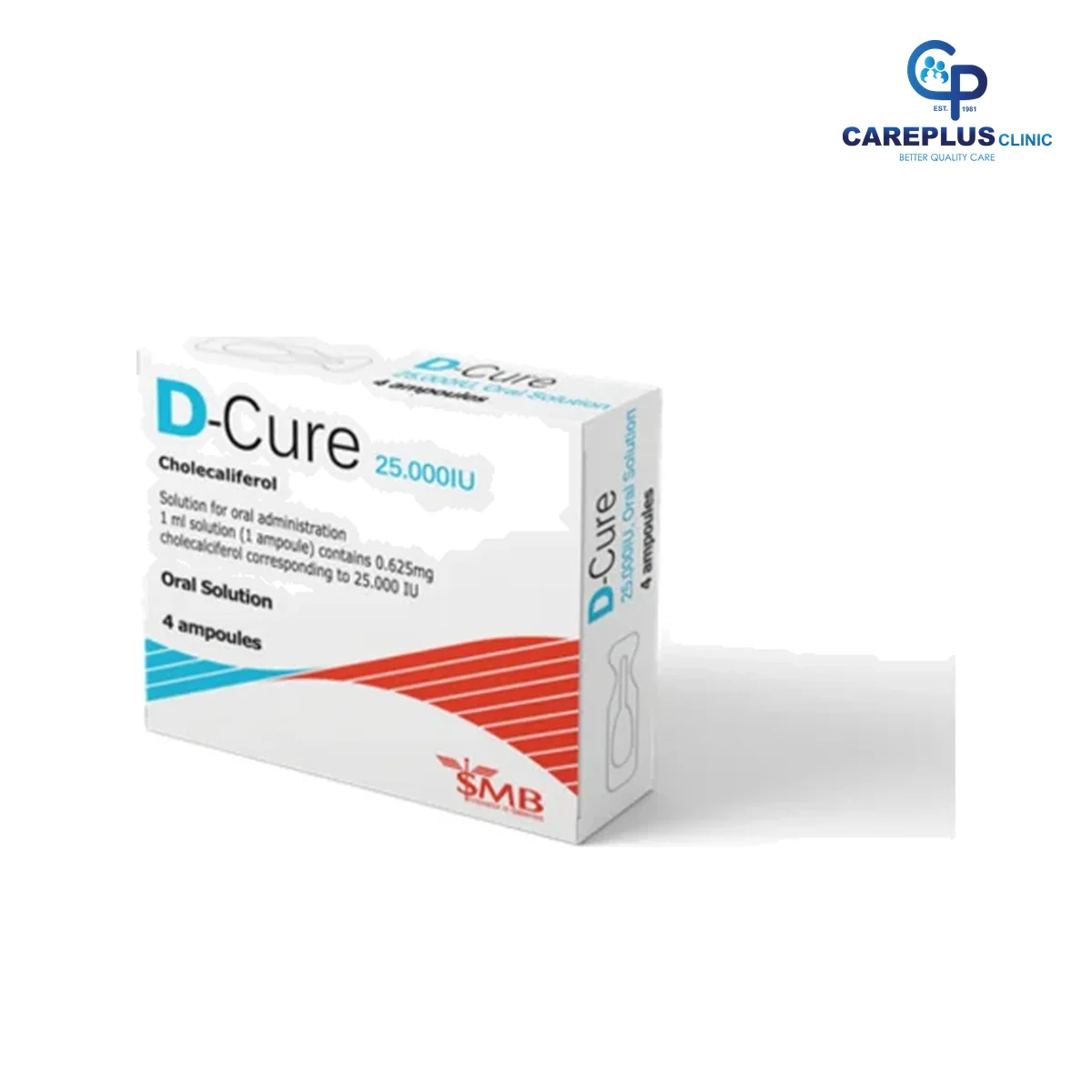
Vitamin D helps the body absorb calcium and keeps bones and muscles healthy. The skin makes it when sunlight hits it, and small amounts come from food. Some people need a supplement, and some need a high-dose course for a confirmed deficiency. See D-Cure 25000 IU at CAREPLUS.
In short: get your level checked before you take high-dose vitamin D. D-Cure 25000 IU is a strong dose meant for a doctor-directed course, not a daily multivitamin.
Why it matters
Low vitamin D can weaken bones and cause muscle aches and tiredness. Many people with low levels have no symptoms, so a blood test is the only way to be sure.
How it is tested
A blood test measures 25-hydroxyvitamin D. The result shows whether your level is low, adequate or high. Your doctor uses it, along with your symptoms and health history, to decide whether you need treatment.
Why high doses need a doctor
Vitamin D is fat-soluble, so the body stores it and too much builds up over time. Too much vitamin D raises blood calcium, which can cause nausea, weakness, constipation, kidney stones and, in severe cases, kidney damage. Daily high doses taken without a plan are the main risk.
Who should be extra careful
- people with kidney disease, or a history of kidney stones
- people with high blood calcium, sarcoidosis or other conditions that raise calcium
- people taking digoxin or thiazide diuretics (water tablets)
- pregnant or breastfeeding women, and children, whose doses must be set by a doctor
Using it safely
- Follow the doctor’s instructions and the leaflet for how many ampoules, how often and for how long.
- Do not take extra vitamin D from other supplements or multivitamins at the same time unless your doctor says so.
- Note the date you started, so your doctor can plan a follow-up blood test.
See a doctor if
- you have nausea, vomiting, constipation or stomach pain
- you are very thirsty, passing a lot of urine, or feel confused or weak
Questions? WhatsApp CAREPLUS on +60 11-2615 1500.
Questions people ask
How do I know if I am low in vitamin D?
A blood test measures 25-hydroxyvitamin D. Many people with low levels have no symptoms. A doctor can tell you whether you need testing and whether a supplement is suitable.
Can I take D-Cure every day?
Not unless your doctor has prescribed it. High-dose vitamin D is usually given for a set period to correct a deficiency, with a plan for follow-up. Follow the doctor’s instructions and the leaflet.
What are the signs of too much vitamin D?
Nausea, vomiting, constipation, weakness, frequent urination and thirst can point to high calcium. Stop the supplement and see a doctor if you have these symptoms.
Sources
Get it from CarePlus Clinic
More health guides
- Aldara (imiquimod) cream explained: what it treats, how it is used and what to expect
- Ear infection and ofloxacin ear drops: how to use Effexin safely
- Papillex+ for HPV follow-up: what is in it and what it cannot do
- Travelling with sexual health medicines: what to pack, what to know and where to get help