
Tumour marker test vs DNA methylation test: which cancer blood test is right for you?
What tumour marker blood tests (CEA, AFP, CA-125, CA 19-9, PSA) can and can't tell you, how DNA methylation tests like EpiSure16 differ, and which to choose. By a family medicine specialist.
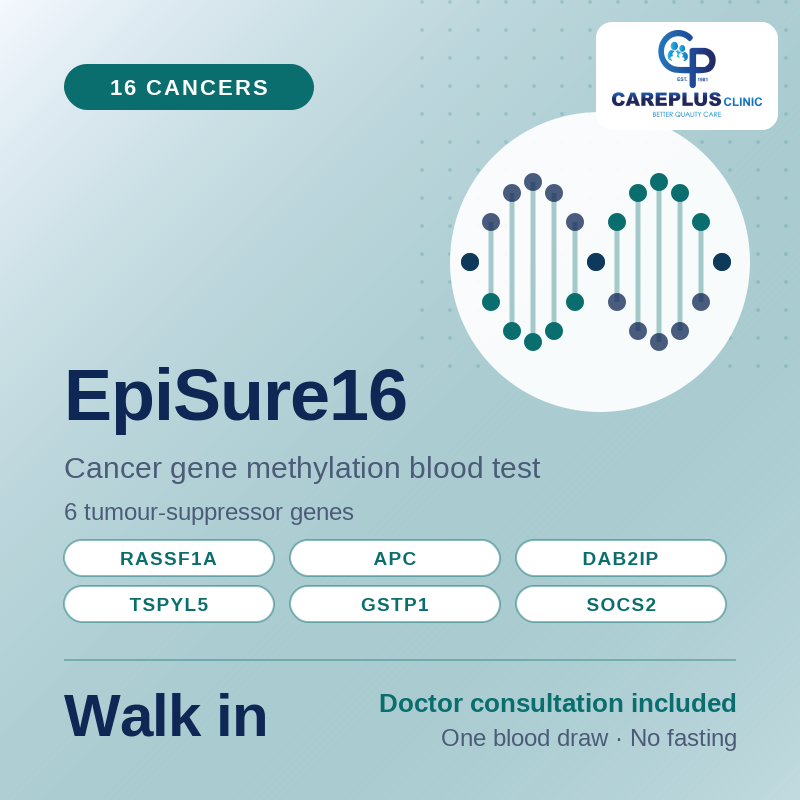
"Tumour marker test" is one of the most searched cancer tests in Malaysia. Many people do it in a health screening package hoping it will find cancer early. Here is what these tests really show, and how a DNA methylation test such as EpiSure16 is different.
In short: tumour markers are proteins that some cancers release. They are useful for monitoring a known cancer, but they often rise late and can be raised by harmless conditions, so a normal result does not rule out cancer. DNA methylation tests look at a different, earlier change: tumour-suppressor genes being switched off. Neither is a diagnosis, and neither replaces mammograms, Pap smears or colon screening.
Common tumour markers and what they are used for
| Marker | Linked cancer | Can also be raised by |
|---|---|---|
| CEA | Colorectal and others | Smoking, inflammation of the gut, liver disease |
| AFP | Liver | Hepatitis, cirrhosis, pregnancy |
| CA-125 | Ovary | Periods, endometriosis, fibroids, pelvic infection |
| CA 19-9 | Pancreas, bile duct | Gallstones, pancreatitis, blocked bile duct |
| PSA | Prostate | Enlarged prostate, infection, recent ejaculation or cycling |
Except for PSA (and AFP in people with hepatitis B or cirrhosis, together with an ultrasound), these markers are not recommended for screening healthy people.
What a DNA methylation test measures
Tumour-suppressor genes are the body's brakes on cancer. When cells start to turn cancerous, these genes are often switched off by methylation, a chemical tag on the DNA. Fragments of this DNA reach the blood. EpiSure16 measures methylation of 6 such genes (RASSF1A, APC, DAB2IP, TSPYL5, GSTP1, SOCS2) linked to 16 cancers, and gives a low, moderate or high risk score.
Side by side
| Tumour markers | DNA methylation (EpiSure16) | |
|---|---|---|
| What it measures | Proteins made by some tumours | Methylation of 6 tumour-suppressor genes in blood DNA |
| Cancers | One marker per cancer type | 16 cancer types in one test |
| Best use | Monitoring a known cancer | A risk signal in people without symptoms, followed up by a doctor |
| Result | A number for each marker | Low, moderate or high risk |
| Main limit | Often normal in early cancer; raised by non-cancer conditions | A risk result, not a diagnosis; needs follow-up tests if raised |
Which should you choose?
- First, do the proven screening for your age: mammogram (women, usually from 40 to 50 as your doctor advises), Pap smear (from age 20 if sexually active) or HPV test (women 30 to 65), colon screening such as a stool FIT test from 50, and low-dose CT for long-term smokers if your doctor advises.
- Already have cancer, or being followed up for one? Your specialist will use the tumour marker that fits your cancer.
- Want a broader check across many cancers, including ones without routine screening? A methylation test such as EpiSure16 can add a risk signal, with a doctor to plan the follow-up.
- Have symptoms such as a lump, bleeding, a change in bowel habit or weight loss? See a doctor for proper tests; don't rely on any screening blood test.
Not sure what suits you? Our doctors can help. WhatsApp +60 11-2615 1500 or read how EpiSure16 works.
Watch: how EpiSure16 works
5. Questions people ask
Can a tumour marker test detect cancer early?
Usually not reliably. Most tumour markers rise late and can be normal in early cancer, and they can be raised by harmless conditions. They are mainly used to monitor a known cancer.
What is the difference between a tumour marker test and a DNA methylation test?
Tumour markers measure proteins released by some cancers. A DNA methylation test such as EpiSure16 measures whether tumour-suppressor genes are being switched off, a change linked to early cancer development, across 16 cancers in one test.
Does a high tumour marker mean I have cancer?
No. Many harmless conditions raise tumour markers. Your doctor will look at your symptoms, history and other tests before deciding if more checks are needed.
Get it from CarePlus Clinic
More health guides
- Melatonin in Malaysia: is it legal, where to buy it, and how to take 5 mg safely
- Melatonin for better sleep: does it work, when to take it, and who it helps most
- Mounjaro (tirzepatide) in Malaysia: how it works, doses, results, side effects and getting it safely
- Mounjaro side effects: nausea, constipation, fatigue and what to do about them