
CIN 1 and abnormal Pap smears: what your result means and what happens next
ASC-US, LSIL, CIN 1, HSIL: what an abnormal Pap smear or colposcopy result means, how often CIN 1 goes away by itself, the follow-up plan, and what you can do meanwhile.
An abnormal Pap smear is common and rarely means cancer. Most results show mild changes caused by HPV that go away by themselves. This guide explains the words on your report and what usually happens next.
In short: CIN 1 is a mild, low-grade change in the cells of the cervix. It is not cancer, and most cases go away by themselves within 1 to 2 years. The usual plan is a repeat test in about 12 months, not treatment. Higher grades (CIN 2 and 3) are treated with a small procedure that works very well.
The words on your report
| Result | What it means | Usual next step |
|---|---|---|
| ASC-US | Slightly unusual cells, unclear cause | HPV test, or repeat in 12 months |
| LSIL | Low-grade change, usually from HPV | Repeat testing or colposcopy, by age and HPV type |
| CIN 1 | Low-grade change confirmed on a biopsy | Repeat testing in about 12 months |
| HSIL, CIN 2 or CIN 3 | Higher-grade change that can progress | Colposcopy and usually treatment |
Will CIN 1 go away?
Usually, yes. Most CIN 1 clears as the body clears HPV, typically within 1 to 2 years. Only a small number progress, which is why follow-up matters. If CIN 1 lasts 2 years or more, your gynaecologist may suggest treatment.
What happens next
- Repeat test (HPV test and/or Pap smear), usually in about 12 months.
- Colposcopy if you have HPV 16 or 18, or the change persists: a doctor looks at the cervix through a magnifier and may take a small biopsy.
- Treatment for CIN 2 or 3, or CIN 1 that does not go away: usually LEEP, a short procedure under local anaesthetic.
Symptoms
CIN usually causes no symptoms. See a doctor promptly for bleeding after sex, between periods or after menopause.
What you can do meanwhile
- Do not miss your follow-up test. It is the single most important step.
- Stop smoking: it slows HPV clearance from the cervix.
- Get the HPV vaccine if you have not had it, to protect against other types.
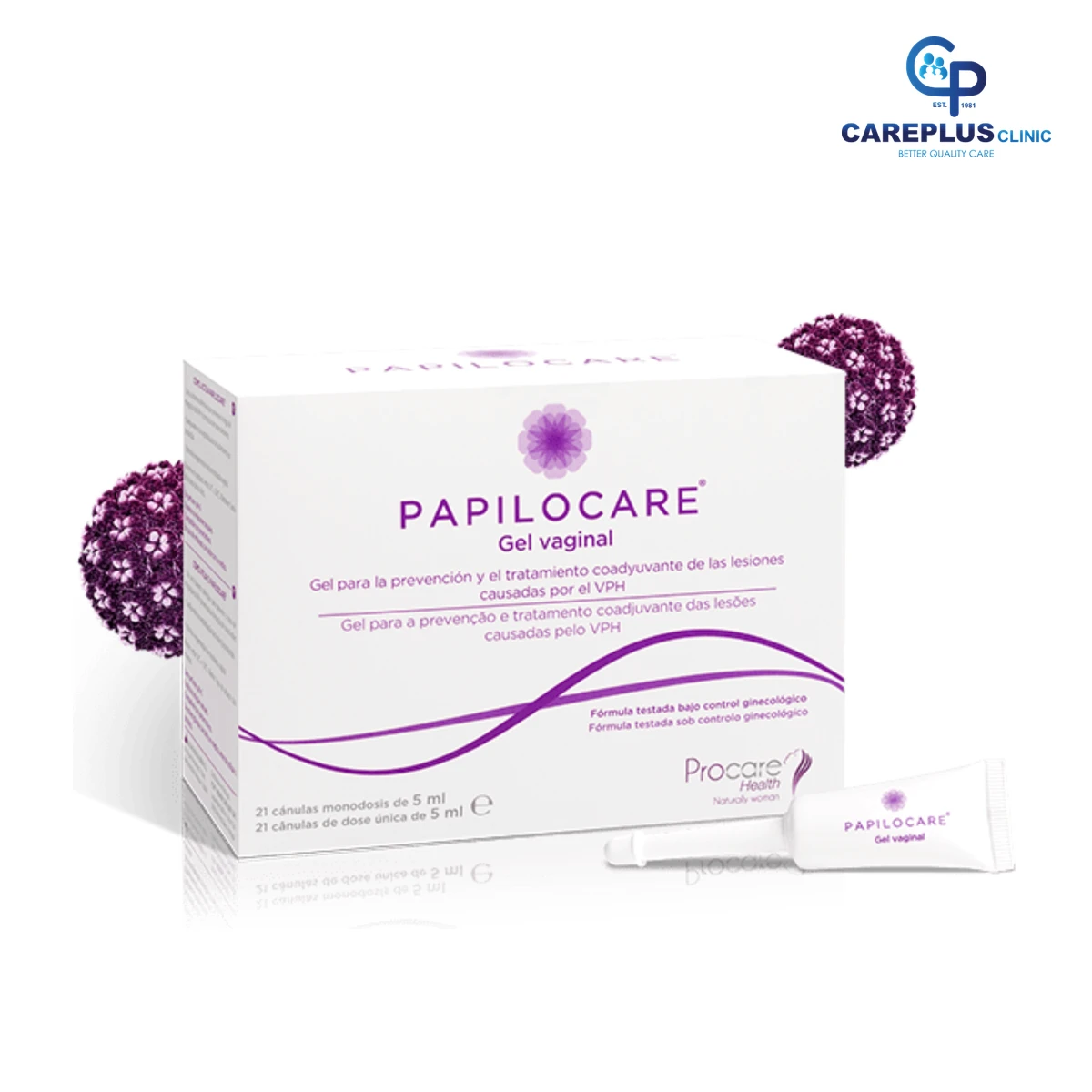
- Ask about Papilocare: a hormone-free vaginal gel studied in women with HPV and ASC-US or LSIL. In the PALOMA trial, 85% had normal results after 6 months versus 65% who only waited. See Papilocare.
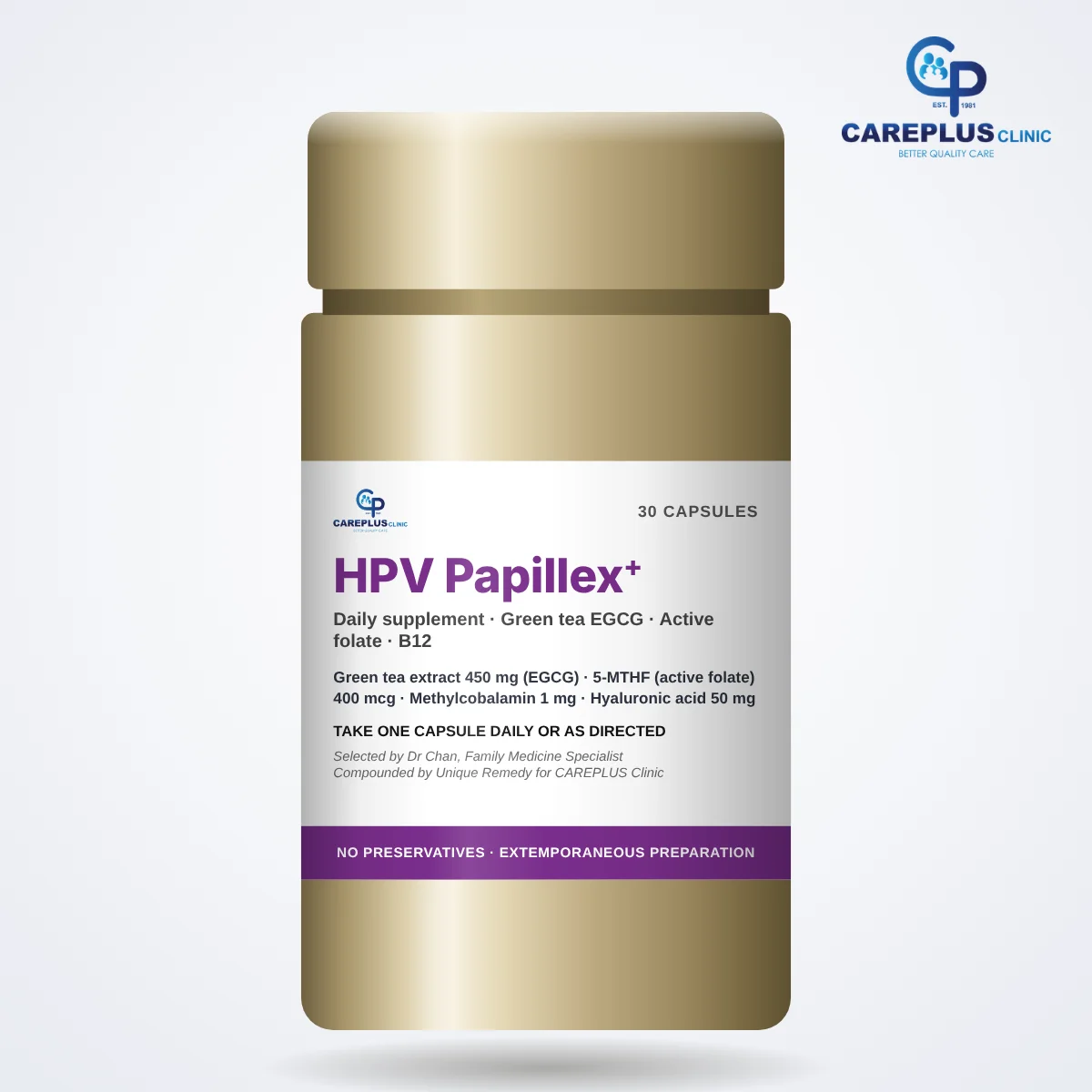
- Eat well: folate and B12 are needed for normal cell division. If your diet is limited, our doctor-formulated Papillex+ provides active folate, B12 and green tea extract. It is a supplement, not a treatment.
More: HPV explained · HPV positive? What happens next · HPV vaccination.
6. Questions people ask
Is CIN 1 cancer?
No. CIN 1 is a mild, low-grade change in cervical cells. Most cases go away by themselves within 1 to 2 years.
Does CIN 1 need treatment?
Usually not straight away. The usual plan is a repeat test in about 12 months. Treatment is considered if it lasts 2 years or more, or if a higher grade is found.
What is the difference between LSIL and HSIL?
LSIL is a low-grade change that usually clears by itself. HSIL is a higher-grade change that needs colposcopy and usually treatment.
Sources
Get it from CarePlus Clinic
More health guides
- HPV positive? What your result means, what happens next, and where Papilocare fits
- Papilocare studies explained: what the PALOMA trial shows, and what it doesn't
- HPV explained: what it is, symptoms, HPV 16 and 18, and what to do if you're positive
- Papillex+ explained: green tea EGCG, active folate and B12, and what it cannot do